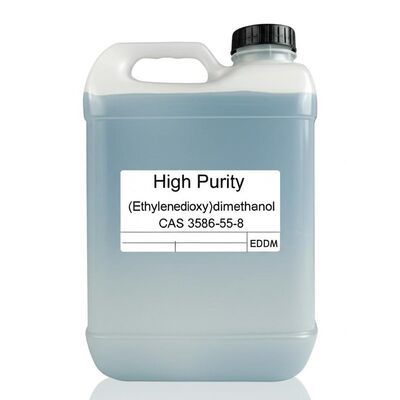
(Ethylenedioxy)dimethanol (CAS 3586-55-8), commonly referred to as EDDM or Ethylene glycol bis(semiformal), is a specialized organic compound used primarily as a fast-acting biocide and preservative. It belongs to the class of formaldehyde-releasing agents, which provide antimicrobial action by slowly releasing formaldehyde in a controlled manner. EDDM is particularly valued in the industrial sector for its high water solubility, low odor, and broad-spectrum activity against bacteria and fungi. It is a critical component in maintaining the shelf-life of water-based products, such as metalworking fluids, polymer emulsions, and adhesives.
1. Broad-Spectrum Antimicrobial Activity
Advantage: Highly effective against a wide range of Gram-positive and Gram-negative bacteria, as well as yeast and molds.
Benefit: Superior Product Protection: Prevents spoilage, gas formation, and unpleasant odors in aqueous systems, ensuring the quality and performance of industrial fluids.
2. Fast-Acting & Long-Lasting Preservative
Advantage: Provides quick initial sterilization followed by sustained antimicrobial protection through controlled release.
Benefit: Extended Fluid Life: Reduces the frequency of fluid changes in metalworking applications, lowering operational costs and waste disposal.
3. Excellent Compatibility & Low Odor
Advantage: Miscible with water in all proportions and possesses a significantly lower odor profile compared to other formaldehyde releasers.
Benefit: Improved Workspace Environment: Can be easily formulated into various coatings and detergents without affecting the final product's scent or color, making it more user-friendly for operators.
| Property | Value/Description |
|---|---|
| CAS Number | 3586-55-8 |
| EINECS Number | 222-720-6 |
| Molecular Formula | C4H10O4 |
| Molecular Weight | 122.12 |
| Appearance | Colorless to pale yellow transparent liquid |
| Density (20 C) | 1.18 - 1.22 g/cm3 |
| pH (1% water sol.) | 7.0 - 9.0 |
| Solubility | Fully soluble in water |
| Test Item | Specification Standard | Actual Result |
|---|---|---|
| Appearance | Clear Colorless Liquid | Pass |
| Assay (as EDDM) | ≥ 90.0% | 91.45% |
| Formaldehyde Content | 44.0 - 47.0% | 45.2% |
| Water Content | ≤ 10.0% | 8.1% |
| Color (APHA) | ≤ 50 | 15 |
| Refractive Index (20 C) | 1.435 - 1.450 | 1.442 |
Metalworking Fluids
Essential preservative for soluble oils, semi-synthetic, and synthetic fluids to prevent microbial degradation and bio-corrosion.
Paints and Coatings
Used as an in-can preservative to prevent microbial growth during storage and maintain product viscosity.
Detergents and Cleaners
Added to industrial and household liquid cleaners to ensure long-term stability and hygiene.
Adhesives and Emulsions
Protects water-based glues and polymer dispersions from fungal and bacterial spoilage.
Packaging: 200kg net weight in UN-certified plastic drums; 1000kg IBC tanks.
Storage: Store in a cool, dry, and well-ventilated warehouse. Crucial: Keep containers tightly closed. Avoid storage at temperatures above 40 C for extended periods as this may accelerate formaldehyde release. Store away from strong acids and oxidizing agents.
EDDM; (Ethylenedioxy)dimethanol; 1,2-Bis(hydroxymethoxy)ethane; Ethylene glycol bis(semiformal).
Ethylene Glycol (CAS 107-21-1) —— Precursor and related glycol material.
Formaldehyde (CAS 50-00-0) —— The active antimicrobial component released by EDDM.
Isothiazolinones (CMIT/MIT) (CAS 55965-84-9) —— Often used in combination for synergistic biocide effects.
Triethanolamine (CAS 102-71-6) —— Commonly used in metalworking fluid formulations for pH control.
Polymer Emulsions (e.g., VAE) (CAS 24937-78-8) —— Aqueous systems requiring EDDM preservation.
Q: Where can I find the EINECS number for (Ethylenedioxy)dimethanol?
A: The EINECS number is 222-720-6, as listed in the physical properties table.
Q: Is EDDM safe for use in all types of paints?
A: EDDM is highly compatible with most water-based coatings. However, because it releases formaldehyde, it should be checked against specific local regulations regarding VOCs and indoor air quality standards.
Q: How does EDDM compare to other biocides like MIT?
A: EDDM is often preferred for its fast-acting "knockdown" effect on bacteria. It is frequently used in rotation or combination with isothiazolinones to prevent microbial resistance.
Q: Does it affect the color of my product?
A: Our high-purity EDDM has very low color (APHA ≤ 50), so it does not typically cause yellowing in clear or white formulations.
(Ethylenedioxy)dimethanol (CAS 3586-55-8), commonly referred to as EDDM or Ethylene glycol bis(semiformal), is a specialized organic compound used primarily as a fast-acting biocide and preservative. It belongs to the class of formaldehyde-releasing agents, which provide antimicrobial action by slowly releasing formaldehyde in a controlled manner. EDDM is particularly valued in the industrial sector for its high water solubility, low odor, and broad-spectrum activity against bacteria and fungi. It is a critical component in maintaining the shelf-life of water-based products, such as metalworking fluids, polymer emulsions, and adhesives.
1. Broad-Spectrum Antimicrobial Activity
Advantage: Highly effective against a wide range of Gram-positive and Gram-negative bacteria, as well as yeast and molds.
Benefit: Superior Product Protection: Prevents spoilage, gas formation, and unpleasant odors in aqueous systems, ensuring the quality and performance of industrial fluids.
2. Fast-Acting & Long-Lasting Preservative
Advantage: Provides quick initial sterilization followed by sustained antimicrobial protection through controlled release.
Benefit: Extended Fluid Life: Reduces the frequency of fluid changes in metalworking applications, lowering operational costs and waste disposal.
3. Excellent Compatibility & Low Odor
Advantage: Miscible with water in all proportions and possesses a significantly lower odor profile compared to other formaldehyde releasers.
Benefit: Improved Workspace Environment: Can be easily formulated into various coatings and detergents without affecting the final product's scent or color, making it more user-friendly for operators.
| Property | Value/Description |
|---|---|
| CAS Number | 3586-55-8 |
| EINECS Number | 222-720-6 |
| Molecular Formula | C4H10O4 |
| Molecular Weight | 122.12 |
| Appearance | Colorless to pale yellow transparent liquid |
| Density (20 C) | 1.18 - 1.22 g/cm3 |
| pH (1% water sol.) | 7.0 - 9.0 |
| Solubility | Fully soluble in water |
| Test Item | Specification Standard | Actual Result |
|---|---|---|
| Appearance | Clear Colorless Liquid | Pass |
| Assay (as EDDM) | ≥ 90.0% | 91.45% |
| Formaldehyde Content | 44.0 - 47.0% | 45.2% |
| Water Content | ≤ 10.0% | 8.1% |
| Color (APHA) | ≤ 50 | 15 |
| Refractive Index (20 C) | 1.435 - 1.450 | 1.442 |
Metalworking Fluids
Essential preservative for soluble oils, semi-synthetic, and synthetic fluids to prevent microbial degradation and bio-corrosion.
Paints and Coatings
Used as an in-can preservative to prevent microbial growth during storage and maintain product viscosity.
Detergents and Cleaners
Added to industrial and household liquid cleaners to ensure long-term stability and hygiene.
Adhesives and Emulsions
Protects water-based glues and polymer dispersions from fungal and bacterial spoilage.
Packaging: 200kg net weight in UN-certified plastic drums; 1000kg IBC tanks.
Storage: Store in a cool, dry, and well-ventilated warehouse. Crucial: Keep containers tightly closed. Avoid storage at temperatures above 40 C for extended periods as this may accelerate formaldehyde release. Store away from strong acids and oxidizing agents.
EDDM; (Ethylenedioxy)dimethanol; 1,2-Bis(hydroxymethoxy)ethane; Ethylene glycol bis(semiformal).
Ethylene Glycol (CAS 107-21-1) —— Precursor and related glycol material.
Formaldehyde (CAS 50-00-0) —— The active antimicrobial component released by EDDM.
Isothiazolinones (CMIT/MIT) (CAS 55965-84-9) —— Often used in combination for synergistic biocide effects.
Triethanolamine (CAS 102-71-6) —— Commonly used in metalworking fluid formulations for pH control.
Polymer Emulsions (e.g., VAE) (CAS 24937-78-8) —— Aqueous systems requiring EDDM preservation.
Q: Where can I find the EINECS number for (Ethylenedioxy)dimethanol?
A: The EINECS number is 222-720-6, as listed in the physical properties table.
Q: Is EDDM safe for use in all types of paints?
A: EDDM is highly compatible with most water-based coatings. However, because it releases formaldehyde, it should be checked against specific local regulations regarding VOCs and indoor air quality standards.
Q: How does EDDM compare to other biocides like MIT?
A: EDDM is often preferred for its fast-acting "knockdown" effect on bacteria. It is frequently used in rotation or combination with isothiazolinones to prevent microbial resistance.
Q: Does it affect the color of my product?
A: Our high-purity EDDM has very low color (APHA ≤ 50), so it does not typically cause yellowing in clear or white formulations.